

🐸 Take 1: AI Agents Will Handle 30% of Inhouse Work
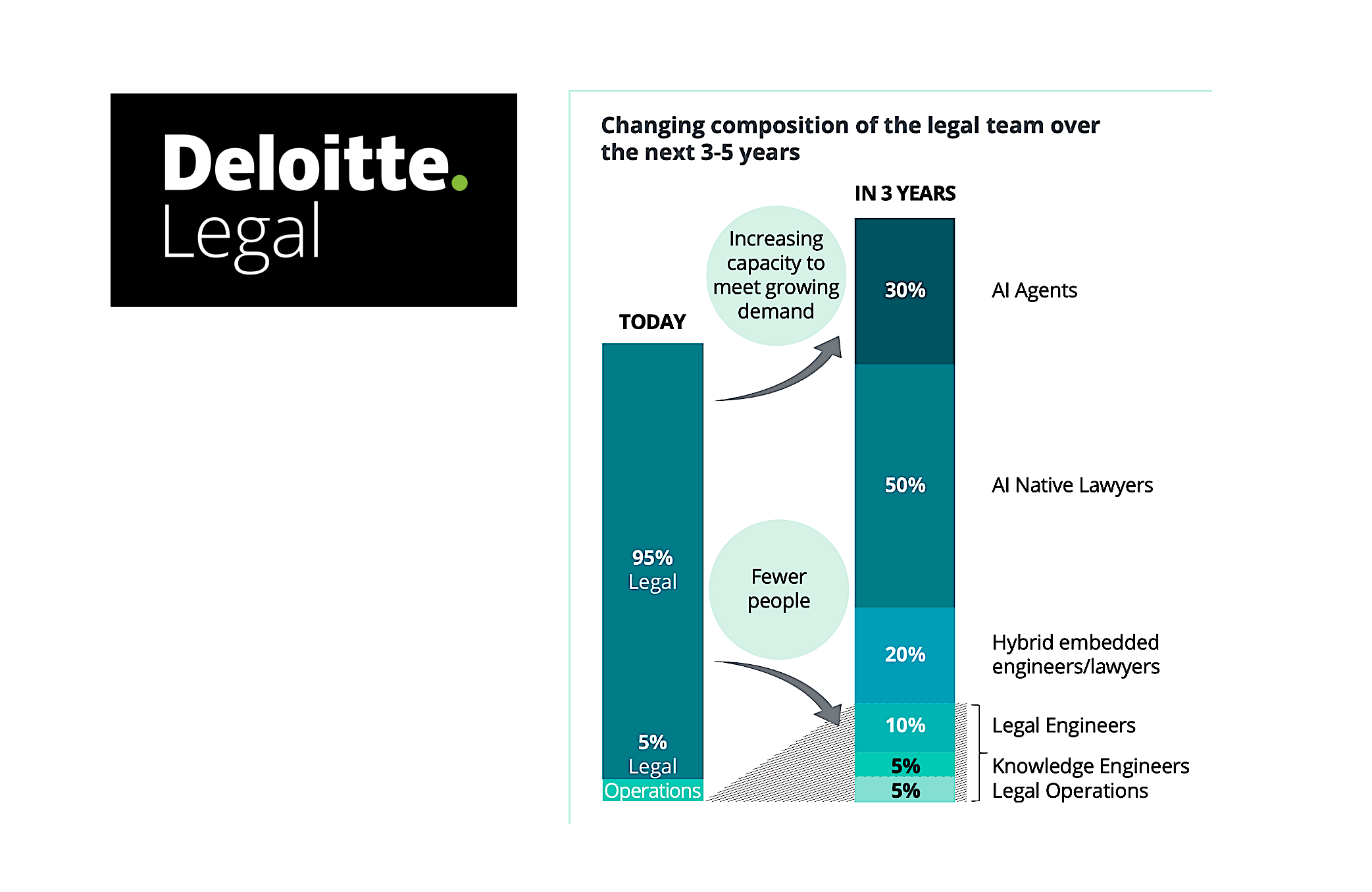
Deloitte Legal's new analysis says that AI agents could handle 30% of in-house legal work within three to five years, with hourly billing expected to fall from 72% to 44% of firm revenue in two to three years. For EU firms still billing by the hour, that's a client conversation waiting to happen, especially since the same survey found 58% of GCs say outside counsel rarely raise AI benefits with them at all. Is your firm raising it first?
🐸 Take 2: Fable 5 & Mythos 5 Now Globally Available
As of July 1, the export control restrictions on Claude Fable 5 and Mythos 5 were lifted. Fable 5 is now accessible globally via Claude Platform, Claude.ai, Claude Code, and Claude Cowork. For EU firms, the question remains do you want to trust and build using models that could be taken away at the order of the US government?
🐸 Take 3: Test On Real Data?
This week we're asking the Spryngy's 7 community directly: when your firm evaluates something like Spellbook's new Autonomous Contract Management or Legora's expanding aOS, who actually tests it against your real contracts before rollout, you, or the vendor's demo? Reply and tell us, and we'll bring the most useful answers into the next issue. If you want to compare notes with other AI-forward EU lawyers then join the Spryngbase community.
🐸 Take 4: Kirkland & Ellis Partners with Litigation Platform Syllo
Kirkland & Ellis has struck an exclusive build-rights deal with litigation platform Syllo, its latest move, after Palantir and a legal-AI hiring spree, toward owning its tooling. Few EU firms have Kirkland's budget, but the question scales down to this: Do you know exactly what you're locked into with your current AI vendor, and what switching would cost?
🐸 Take 5: EU AI Act Full Application: August 2, 2026
The EU AI Act enters full application on August 2, 2026. Transparency obligations, chatbot disclosure requirements, and AI-generated content labeling rules all kick in at this deadline. While high-risk AI system (HRAIS) obligations for use-based deployments have been deferred 16 months to December 2027 via the Digital AI Omnibus, most day-to-day AI tools used by law firms will now face active regulatory scrutiny.
🐸 Take 6: Gemini 3.5 Flash is Now the Recommended Everyday Model According to Google
Google has positioned Gemini 3.5 Flash as its recommended model for speed, coding, agents, and long-document work. With 900 million monthly active users on the Gemini app (up from 400M a year ago), Google is rapidly closing the gap with ChatGPT in mainstream adoption, including in enterprise and SME contexts. With models changing quickly it might be interesting for EU lawyers to keep experimenting across different providers.
🐸 Take 7: Racine Runs Legora as Core Part of Daily Legal Work
Racine, a leading French independent law firms, has been using Legora in its day-to-day legal work for the past months. Jean-Christophe Beaury, Partner at Racine, said: “The past six months have confirmed that AI, when deployed thoughtfully and embraced across the firm, can strengthen legal analysis, improve efficiency and deliver tangible value to both our lawyers and, ultimately, our clients. Our objective has never been to replace legal expertise, but to enhance it.”
Spryngbase is a community for AI forward legal professionals in the EU. We are looking for our first 100 members…